 Have heard of something called narcissist? I am a living example.
just kidding.. nothing like that.. I am simple but not down to earth guy.. not quite open yet not reserved.. kinda stuck in between two universes.. don't know my destiny.. don't know my path.. love cars.. love computer..love gizmos..
thats all folks..
Have heard of something called narcissist? I am a living example.
just kidding.. nothing like that.. I am simple but not down to earth guy.. not quite open yet not reserved.. kinda stuck in between two universes.. don't know my destiny.. don't know my path.. love cars.. love computer..love gizmos..
thats all folks..Sunday, January 01, 2006


Saturday, December 31, 2005
Top Gear's Awards for 2005
Best Car:
Ferrari F430
BMW M5
Bugatti Veyron (Winner)
Biggest Surprise:
Honda Civic
Nissan Murano
Audi RS4 (Winner)
Ugliest Car:
Ssangyong Kyron
Ssangyong Rodius
Ssangyong Musso
BMW 3-series (Winner)
Best Noise:
Ferrari F430
Mercedes-Benz CLS55 AMG
Aston Martin V8 Vantage (Winner)
Gas Guzzler:
Range Rover Sport
Bugatti Veyron
Hemel Hempstead
Ford GT (Winner)
Coolest Car:
Porsche 911 (Hammond and May’s Winner)
Aston Martin V8 Vantage (Clarkson’s Winner)
Tuesday, December 27, 2005
My hobby.. Windows Customization
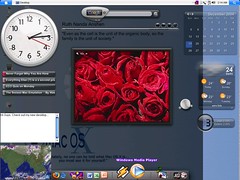
Monday, December 26, 2005
Welcome Lambo...padharo mhare desh...
Finally the dream coming true.
Now the men/women in blue will witness the raw power of a yellow BULL. i.e. the Lamborghini..and the first model to be launched in India is Gallardo..
Read the Complete Story
Lamborghini Gallardo heads here
Apaharan
Tags:
movies
Yesterday I saw the movie titled Apaharan..
I should clarify in the beginning that I am not a movie critic..but some points to be noted:
: The same old story
: But the screenplay was good
: Ajay and Nana Patekar were really good
: Bipasha was wasted on that role.
But watchable movie.
Wednesday, December 21, 2005
Alonso Moving to McLaren!!!
Tags:
f1
McLaren has shocked the world of Formula One by announcing that World Champion Fernando Alonso will be driving for the team from the start of the 2007 season.
Alonso's decision to sign for the Woking-based team means that either Kimi Raikkonen or Juan Pablo Montoya will be moving aside to make way for the Spanish star - which is likely to have a considerable knock-on effect throughout the rest of the drivers market.
It will also be interesting to see what effect the announcement has on Alonso's motivation during the 2006 season - when he will still be driving for the Renault team. Juan-Pablo Montoya suffered from a relatively disappointing season in 2004 after it was announced that he would be leaving Williams for McLaren.
Read Full Story
Saturday, December 17, 2005
Ramp creates power as cars pass
Tags:
tech
"A road ramp that uses passing cars to generate power has been developed.
Dorset inventor Peter Hughes' Electro-Kinetic Road Ramp creates around 10kW of power each time a car drives over its metal plates.
More than 200 local authorities had expressed an interest in ordering the £25,000 ramps to power their traffic lights and road signs, Mr Hughes said.
Around 300 jobs are due to be created in Somerset for a production run of 2,000 ramps next year.
Plates in the ramp move up and down as vehicles pass over them, driving a generator.
'The ramp is silent, comfortable and safe for vehicles,' Mr Hughes said.
Underneath the Electro-Kinetic Road Ramp
Inventor Peter Hughes spent £1m developing the ramps
Depending on the weight of the vehicle passing overhead, between five and 50kW can be generated."
[Read it somewhere on the BBC website, forgot to copy the link]
Sunday, December 11, 2005
Xbox 360 LIVE… Privacy? What privacy?
Tags:
tech
We know what are you doing with your Xbox..
Microsoft is following the path of Google (trying to collect data on everything what a user does)
http://gaming.hexus.net/content/item.php?item=4040&page=1
A clear case of manipulation of TOS..
Monday, November 28, 2005
Team McLaren Mercedes: Facts & Figures
Tags:
f1
THE TEAM McLAREN MERCEDES ...
.. Sends between 95 (fly-away races) and 135 (European races) personnel to each Grand Prix.
.. Has a race team which comprises: technical director, race team manager, senior race engineer, chief mechanic, software engineer, race strategist, two driver engineers, two assistant engineers, two system engineers, two data analysts, 10 mechanics, two gearbox mechanics two fabricator/carbon repairmen, engine dress, chief truckie, two tyre men, electrician, two support crew, security, senior fuel technician, fuel technician, spares co-ordinator, team co-ordinator.
.. Has a test team which comprises: test team manager, test team engineer, two driver engineers, two assistant engineers, two system engineers, chief mechanic, 12 mechanics, two gearbox technicians, data analyst, engine dress, two tyre men, spares co-ordinator/chief truckie, three full-time truckies, fabricator/laminator/truckie, part-time truckie.
.. Transports approximately 30 tonnes of freight, including three complete race cars at approximately 600kgs each, to grands prix.
.. Takes three spare gearboxes to each race, two built with rear suspension and one loose unit.
.. Takes eight engines to each race, one in each of the four cars and four loose spares.
.. The Team Communications Centre, the team's trackside hospitality unit, travels to all European Grands Prix. It has two floors and comprises offices, meeting rooms, kitchen and dining areas and driver rooms.
.. Takes approximately seven seconds for a pit stop, with 29 crew working on each car, to refuel and to change four wheels and tyres, and the cars can be refuelled at a rate of 12 litres per second.
.. Completed approximately 52,000 kilometres when testing during the 2003 season.
.. Completed approximately 17,000 kilometres when racing in 2003, including Practice, Qualifying, and Races.
.. Generated 40 gigabytes of data during all race meetings and 75 gigabytes of data at all tests in the 2003 season. This equates to about 35 full CDs' worth of data.
.. Consumed 70,000 litres of Mobil Unleaded fuel for track work during the 2003 season.
.. Competes with a car that typically handles 2,500 gearchanges during a race. This figure varies from circuit circuit.
.. Competes with a car that is typically capable of the following performance:
0-60mph / 0 - 96kph 2.3 seconds.
0-100mph / 0 - 160kph 3.6 seconds.
0-100-0mph / 0 -160 - 0kph 6.6 seconds.
and can decelerate from 185mph to a standstill in 3.5 seconds.
.. Michelin supplied Team McLaren Mercedes' race cars with 2304 tyres in total for the 17 Grand Prix weekends in 2003. (1360 dry-weather tyres and 944 wet-weather tyres)
.. 4500 drawings are need to created the 11,000 components that make up each car. This is equivalent to 22 telephone directories.
.. The drivers are subjected to forces of up to 5G under braking.
Source: Mercedes-Benz Motorsport Website
Sunday, November 27, 2005
A look at a Formula One steering column
Tags:
f1
An essential link to turn the car’s wheels
For a sport in which hundredths of a second can mean the difference between pole position or a mid-field grid slot, a car's ability to handle well is paramount. As Phil Gallagher, Senior Design Engineer at McLaren Racing, points out, the steering system provides the driver with his first indication as to how well the car is handling.
The steering column is an essential link in the chain of events that sees a twist of the steering wheel turn the car's wheels. The column is joined to the steering wheel at one end and the rack and pinion at the other. This means that the steering column stretches from the edge of the cockpit down to the front bulkhead.
Quite simply, when the driver turns the steering wheel, the column rotates the pinion gear and the rack moves laterally. The track rods are put into action, shifting the wheels.
Constructed primarily from carbon fibre, the steering column is made of two tubes. They are linked together by a constant velocity joint, which makes sure that the two parts move at the same speed. It also provides high stiffness and low friction. As the man responsible for designing the steering column, Gallagher says these are two of his main concerns. "If there is too much friction or not enough stiffness then it will adversely affect the way the driver can handle the car," he says.
The column features an electrical plug which connects the steering wheel's electronics to the chassis control unit via a wiring harness. This end of the column also has quick disconnect, which means the driver can remove the steering wheel in a hurry. "There's an FIA rule which stipulates that the driver must be able to exit the car in five seconds, so the quick disconnect is very important," he says.
At the steering rack end of the column, a splined joint is used to link the two together, this then connects to the power steering valve and then on to the pinion. Without the power steering, which uses a 200 bar hydraulics supply, the driver would have to work the steering twice as hard.
Another of the requirements for the component laid down by the FIA is the aluminium crush tube. "We have to perform a test in which we drop a weight on the end of the steering column and measure the deceleration," he says. "The peak deceleration must be less than 80g in a crash."
The steering column takes around ten hours to make, and the team takes three or four spares along to each race. They are inspected after completing 1,500kms and serviced after 3,000kms. A typical service would involve complete disassembly, followed by a crack check of the safety critical parts. It would then be re-assembled - with new parts where necessary - and finally tested on the test rig before being signed-off for use on the circuit.
Having arrived at a design that is both light and stiff yet reliable, Gallagher says the steering column is not changed regularly. However, frequent design reviews are carried out and a new design will be put in place if the monocoque changes sufficiently. The current example has been in action for two years with limited change. Proving that, when it comes to steering, Team McLaren Mercedes is always moving in the right direction.
Technical Specification:
Length: Approx. 950mm
Diameter: Approx. 35mm
Material: Carbon fibre; titanium; steel; aluminium
Source McLaren Mercedes
Subscribe to:
Posts (Atom)


